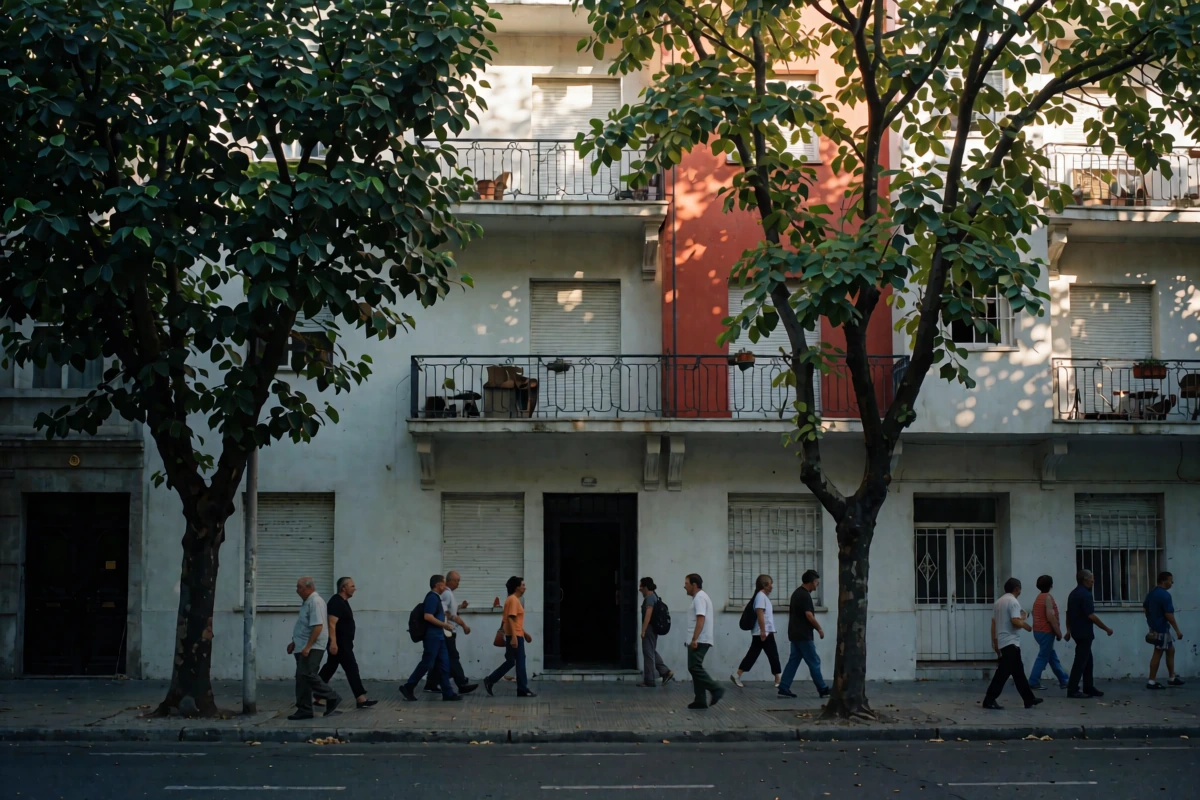
Learn the route in daylight
Start with the exact route from home to transport, groceries, work, school, or a clinic. Walk it in daylight and note crossings, lighting, entrances, shops, and a place to ask for help. Government of Canada travel advice can frame precautions, while your own route and current local information determine what you need to test.
A neighbourhood label cannot describe every block or hour. Write the address and return plan in Spanish and ask a trusted local person which route is practical for your schedule.
When a route feels wrong, change the route or timing and ask a trusted local person a specific question. Do not turn one uncomfortable moment into a sweeping judgement about every resident, block, or city.
Test the evening return
Repeat the route at the time you expect to come home, including the last practical transport connection and the walk from the stop. If weather, a holiday, or a missed bus changes the plan, identify the alternate. Avoid carrying every original document; keep a secure copy and a small amount of information that helps if a bag is lost.
Ask the building about entrances, intercom, lifts, and deliveries. Do not treat a neighbour's reassurance as a guarantee, and do not publish your full route or home details in a public group.
Ask a local contact about the ordinary route without asking for a sweeping ranking of neighbourhoods. Specific questions about a stop, entrance, shop, or late return produce more useful information than a label such as safe or unsafe. Compare the answer with current official advice and your own visit.
Keep Canadian contacts useful
Agree with someone in Canada when you will check in and what happens if your message is late. Tell them the city or route when it helps, but share only what the person needs. Keep the time-zone difference visible and update the plan before a regional trip or late arrival.
The embassy and Registration of Canadians Abroad have official roles, while local emergency services answer an immediate local danger. Keep those contacts separate on your card.
Keep the home routine private when meeting a new person. A public activity, known route, and gradual disclosure allow community connection without making your address part of the first conversation.
Review the routine without fear
After a week, note which route, shop, entrance, and transport choice reduced uncertainty. Change one part at a time. A calm routine does not promise that nothing will happen; it makes a next action easier when a route or service changes.
Choose one adjustment for the next week, such as changing the return stop, moving a shopping errand earlier, or updating the check-in person. Record why it helped. This turns a route observation into a small, testable decision without claiming that the same choice applies to every block or hour.
Ask for specific current information instead of a permanent label. Check the route, lighting, crossings, staffed places, transport options, building entrance, and the time you actually expect to travel. Compare a local observation with current official travel advice and then decide what is reasonable for your household. Keep a trusted contact informed about a changed plan without sharing a new address widely. If you meet someone through a community activity, use a public place and gradual disclosure. A practical routine can reduce uncertainty while leaving room to learn more. Hearsay about a neighbourhood should not become a judgment about its residents.
Keep the routine ordinary
A useful safety habit can be simple: carry the small card you need, lock the home, check the route, keep a backup payment, and tell someone when a late trip changes. Avoid dramatic rules that stop you learning the city or hide uncertainty behind confidence. Review what actually helped after a week.
Current travel advice and local conditions matter more than a fixed neighbourhood stereotype. Recheck both before an unusual route and use emergency services for an immediate concern.